

This blog post is part of a special monthly series entitled “Making a Difference,” documenting the impact of IFPRI’s projects and initiatives. These stories reflect the wide breadth of the Institute’s research, communications, and capacity-strengthening activities around the world, in fulfillment of its mission. The blog series has been peer-reviewed by IFPRI’s Impact Committee members.
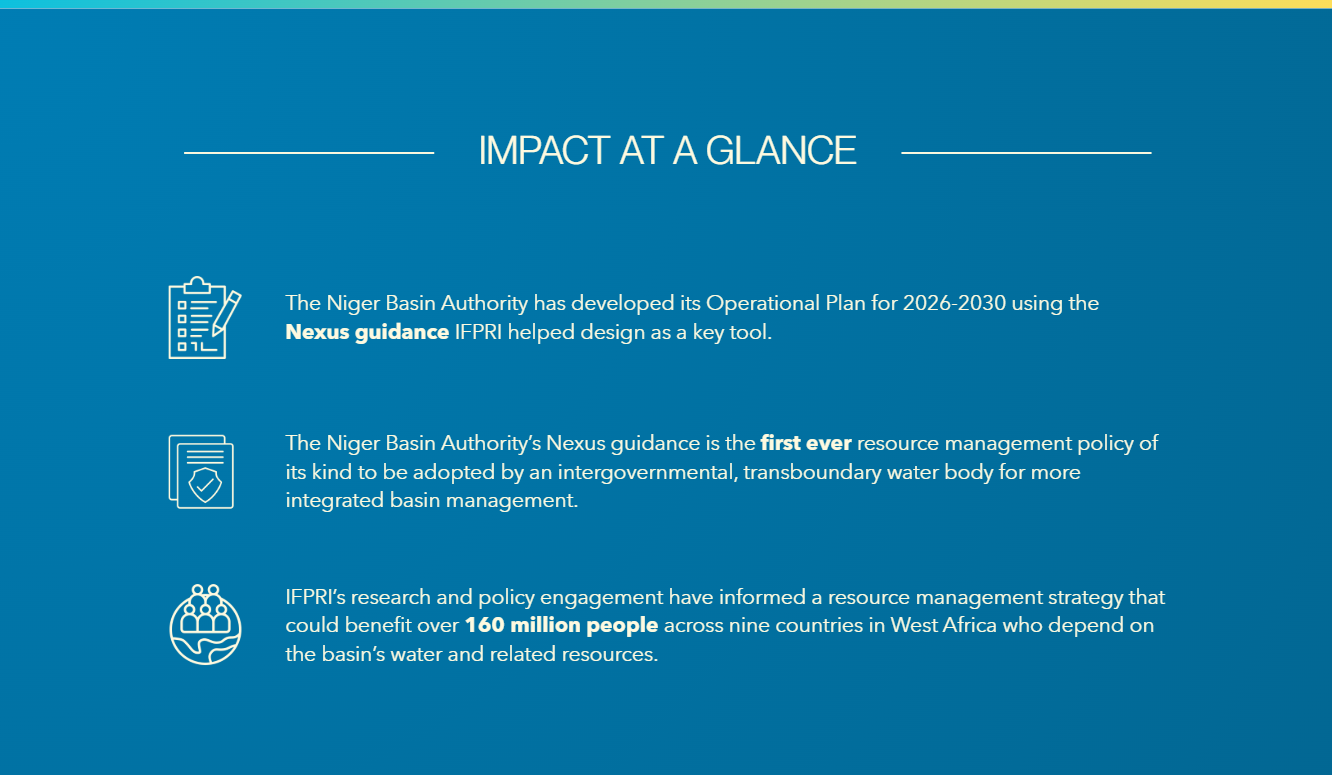
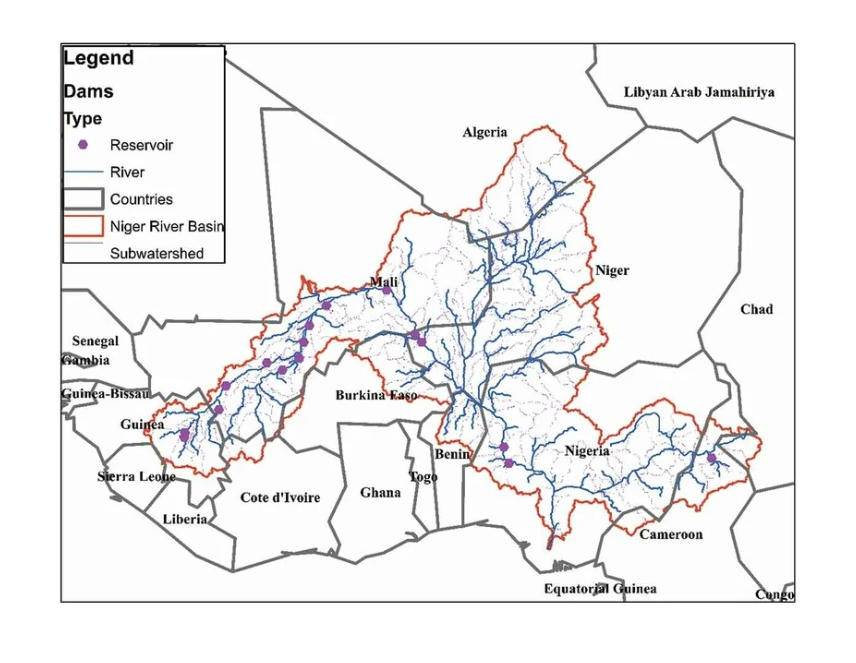
The Niger River is a key lifeline for approximately 160 million people in the nine countries that share the basin’s water and related resources in West Africa. The region’s immediate welfare and long-term development depend on improving the management of the resources and ecosystem services of the Niger River Basin. To achieve this, IFPRI has supported a key regional governing body, the Niger Basin Authority, in developing a sustainable management strategy using the Water-Energy-Food-Environment (WEFE) Nexus approach—which considers synergies and trade-offs across interconnected sectors, increasing the efficiency and effectiveness of investments.
Natural resource management in the Niger River
West Africa faces dramatic levels of water, energy, and food insecurity; environmental degradation; adverse climate
change impacts; instability, insecurity, conflict, and civil strife. Evidence suggests that:
- Agriculture is the primary livelihood for over three-quarters of the population sharing the Niger River, a sector that
consumes over 85% of freshwater withdrawals from the river. - Highly variable rainfall in the basin and increased climate change impacts have increased food insecurity, which now
affects more than 70% of the population. - Only a small share of the population has access to electricity (35%) and improved sanitation facilities (25%).
- The number of people living in the Niger River Basin is anticipated to rapidly increase as the region has some of the
highest population growth rates in the world.
Managing any natural resource system requires weighing complex trade-offs, and their consequences can be
heightened in a fragile context such as that of the Niger River Basin. Balancing various demands for water is a prime
example. For instance, a country might seek to develop hydropower as an alternative energy source (See box). This
requires costly water infrastructure investment, which is important for increasing rural incomes but could compete with
other water uses, such as those for environmental, irrigation, and domestic use. If such a project is not carefully carried
out, agricultural households particularly dependent on local water sources (among other natural resources tied to water)
and already highly vulnerable to climate shocks could be driven deeper into poverty.
A holistic approach combining agricultural and energy development strategies with those for water infrastructure could
jointly improve water, energy, and food security; reduce environmental degradation; and mitigate the adverse impacts
of conflict.
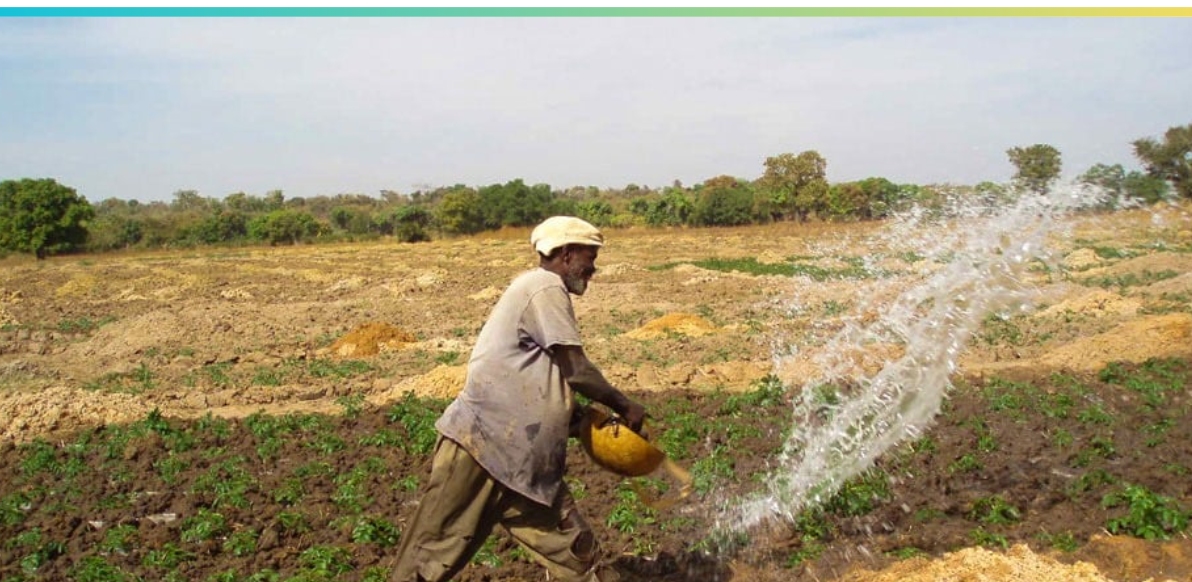
The WEFE Nexus approach
This is where research can play a crucial role. Integrated resource management requires correspondingly complex tools, frameworks, and methodologies—developed from participatory processes that engage the full range of stakeholders that benefit from these resources. The Water-Energy-Food-Environment (WEFE) Nexus approach is one such framework that has proved vital to resource management in the Niger River Basin.
The WEFE Nexus approach applies a holistic lens to resource management issues. First popularized as the Water, Energy, and Food Security (WEF) Nexus at the Bonn 2011 Conference organized by the German Federal Government with the World Economic Forum, the World Wildlife Fund, and IFPRI as topical resource partners, the Nexus approach considers how a project or policy targeting one resource will affect others, for better or for worse, and helps identify measures to reduce negative linkages and strengthen positive ones.
While the Nexus approach had gained traction as a theoretical framework and dialogue tool, it lacked concrete methodologies to support real-world analysis and decision-making. This need prompted the European Union and the German Federal Ministry for Economic Cooperation to establish the Nexus Regional Dialogues Programme (NRDP), implemented by GIZ, to support the institutionalization of the Nexus approach in various regions—including the Niger Basin. IFPRI served as a key technical partner for this NRDP.
Read the full blog on IFPRI.org