
Kenya and CGIAR Strengthen Partnership to Advance Science, Research, and Innovation
By Sokhna Sall Seck
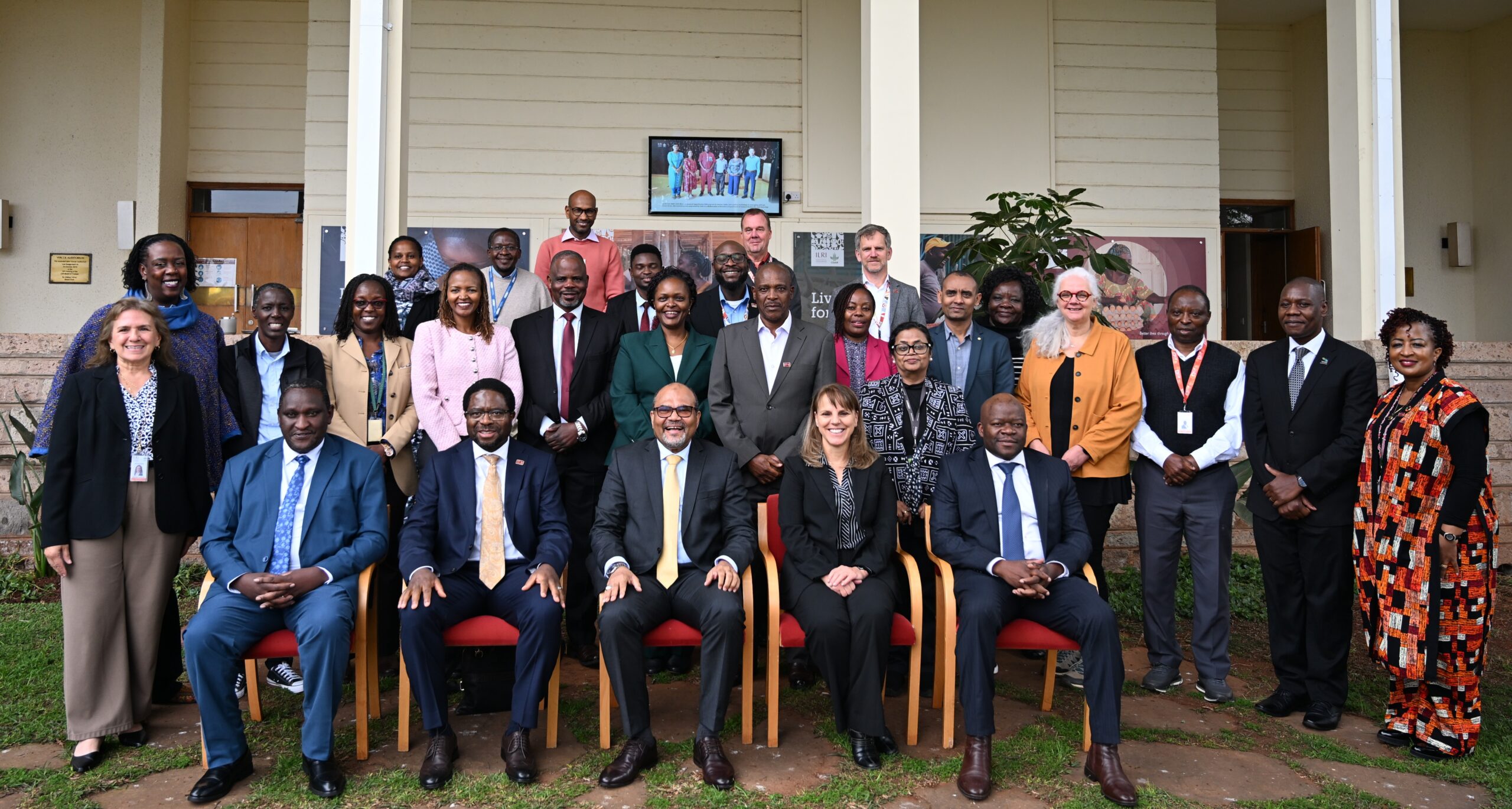
On August 4th, the International Livestock Research Institute (ILRI) hosted Kenya’s Principal Secretary, State Department for Science, Research and Innovation, Prof. Shaukat Abdulrazak, for a high-level visit to its Nairobi campus, bringing together government representatives and CGIAR research centers to explore opportunities to strengthen collaboration on science, research, and innovation for Kenya’s development priorities.
The visit provided an opportunity for the Principal Secretary and his delegation to engage directly with the CGIAR community in Kenya, learn more about the research and innovation taking place across the centers, and discuss how stronger partnerships can help translate scientific evidence into solutions with greater impact.
Representing the International Food Policy Research Institute (IFPRI), Khalid Siddig, who leads IFPRI’s program in Kenya, presented the Institute’s work and highlighted opportunities for deeper collaboration with the Government of Kenya.
Bringing evidence to policy and practice
In his presentation, Dr. Siddig outlined how IFPRI supports food systems transformation in Kenya through three interconnected areas: strategic evidence generation, policy dialogue and engagement, and capacity strengthening and knowledge sharing.
He presented IFPRI’s Kenya portfolio within five broad areas of work: inclusive growth; resilient and sustainable food production; markets and trade; diets and nutrition; and poverty and inequality.
Across these areas, IFPRI’s research in Kenya addresses some of the country’s most pressing development challenges, including agricultural productivity and employment, climate and soil health, market and logistical constraints, food and nutrition security, and inclusive livelihoods and social protection.
The Institute also works closely with government institutions across agriculture, labor, health and social protection, as well as with the Central Bank of Kenya and the national statistical system.
This engagement reflects IFPRI’s broader mission to provide research-based evidence to inform policies and investments that improve food systems and livelihoods, while ensuring that global knowledge and experiences can be connected to country-level priorities.
From research to impact
A central theme of the discussions was the importance of strengthening the link between scientific research, government priorities, and measurable development outcomes.
Government representatives emphasized the need for research institutions to demonstrate the value of science and innovation—not only through publications and new technologies, but through their contribution to productivity, employment, food security, resilience, and broader socioeconomic development.
For IFPRI, this emphasis on impact is closely aligned with its approach to policy-oriented research.
The Institute’s engagement in Kenya seeks not only to generate evidence, but also to work with national stakeholders to translate that evidence into policy dialogue and decision-making.
The discussions also highlighted the importance of jointly identifying research priorities, developing well-governed data and innovation platforms, and strengthening analytical capacity within the country.
These areas offer significant opportunities for IFPRI to further deepen its collaboration with Kenyan institutions and contribute evidence to national policy processes.
A CGIAR platform for collaboration
IFPRI’s contribution formed part of a broader presentation of CGIAR’s research and innovation portfolio in Kenya.
Representatives from several CGIAR centers highlighted work spanning crops and seed systems, water management, fisheries and aquaculture, rice, climate resilience, biodiversity, nutrition, biotechnology, post-harvest management, and agricultural commercialization.
Together, the presentations demonstrated the breadth of expertise available through the CGIAR system and the potential for greater collaboration across disciplines and institutions.
The discussion also recognized the importance of moving beyond institutional silos and creating stronger connections among CGIAR centers, government agencies, national research institutions, universities, the private sector, and other actors in Kenya’s science and innovation ecosystem.
For IFPRI, this systems-oriented approach is particularly relevant. Food systems challenges are interconnected, requiring evidence that brings together economic, agricultural, environmental, nutritional, and social dimensions.
Scaling what works
Another key priority emerging from the visit was scaling successful research and innovations.
Participants acknowledged that generating evidence and developing promising solutions is only the first step. The greater challenge is ensuring that effective approaches reach more farmers, businesses, communities, and policymakers.
CGIAR is exploring opportunities to strengthen this scaling agenda through a proposed CGIAR Scaling Hub in Nairobi, which would help partners identify bottlenecks and develop pathways to move successful innovations from smaller-scale initiatives to wider application.
Kenya’s position as a regional center for science, research, and innovation makes it well placed to play an important role in this effort.
The visit therefore provided more than an opportunity to showcase ongoing research. It created space to consider how the collective expertise and investments of CGIAR and its partners can be better organized to respond to Kenya’s priorities and deliver greater impact.
Strengthening the partnership
The discussions concluded with a shared commitment to move from dialogue toward concrete action.
CGIAR centers and Kenyan institutions will explore the development of a concise framework for engagement, identifying opportunities for collaboration in the short, medium, and long term. This could provide a foundation for a more systematic partnership between CGIAR and Kenya’s science, research, and innovation ecosystem.
The discussions also emphasized the importance of bringing additional stakeholders into this platform, including universities, national research institutions, the private sector, and organizations supporting science and innovation in Africa.
For IFPRI, the engagement reinforces the Institute’s commitment to working closely with Kenya and its partners to ensure that evidence informs policy, policy enables action, and action delivers impact.
As Kenya continues to strengthen its science, research, and innovation ecosystem, partnerships that connect international research expertise with national priorities will be essential.
The visit offered a valuable opportunity to reaffirm that commitment; and to identify practical pathways for turning Kenya’s substantial scientific and innovation potential into tangible socioeconomic gains.
IFPRI remains committed to working closely with the Government of Kenya and CGIAR partners in advancing evidence-based solutions for more productive, resilient, inclusive, and sustainable food systems.