
By Wim Marivoet, Roselyne Alphonce, Fantu Bachewe and Audrey Lulu Mandi
Key takeaways:
Urbanization and Nutrition Demand in Tanzania at a Glance
- Tanzania’s population will more than double from 59.8 million to 138.1 million by 2050, with urbanization rising from 34.5% to 55.4%.
- Current diets rely too heavily on cereals and sugars while severely lacking fruits, dairy, eggs, and vegetables.
- To provide healthy diets for all by 2050, Tanzania must grow food supplies from 24 million tons to 52-62 million tons, with eggs needing to increase 10-37 times but starches like roots and tubers remaining the same.
- Key nutritious foods requiring expansion include fresh milk, eggs, fruits, vegetables, and fish
- Post-harvest losses averaging 40% across food chains represent an immediate opportunity for system improvement
This post summarizes findings of SFS4Youth WORKING PAPER #9
Between now and 2050, Tanzania’s population will more than double, while simultaneously becoming more urban and health-conscious. IFPRI’s research team analyzed census data from 2012 and 2022, combined with household consumption surveys from 2020/21, to ask a simple question: How much food will Tanzania need, and what kind?
Currently, Tanzanians consume roughly 24 million tons of food annually. By 2050, to ensure every person eats a nutritionally adequate diet, the country must supply between 52 and 62 million tons per year. But the real challenge lies not in total volume but in the composition of the food Tanzania grows.
The Urbanization Imperative
Tanzania’s cities will double in size before the countryside stabilizes. The urban population is expected to increase from 20.6 million to 76.5 million, by a growth factor of 3.7. Rural areas, in contrast, will grow modestly from 39.1 million to 61.5 million (by a factor of 1.6).
Rural farmers currently feed a predominantly rural and small urban? population with variation in food preference. Figure 1 shows how food preferences and portion sizes vary across regions. For example, Dar es Salaam residents consume more vegetables and legumes but fewer roots and tubers than other urban areas. On the other hand, rural dwellers eat substantially smaller daily portions, relying mostly on cereals, roots, and tubers. Zanzibar presents an entirely different pattern, where islanders consume more fish and legumes but smaller total portions.
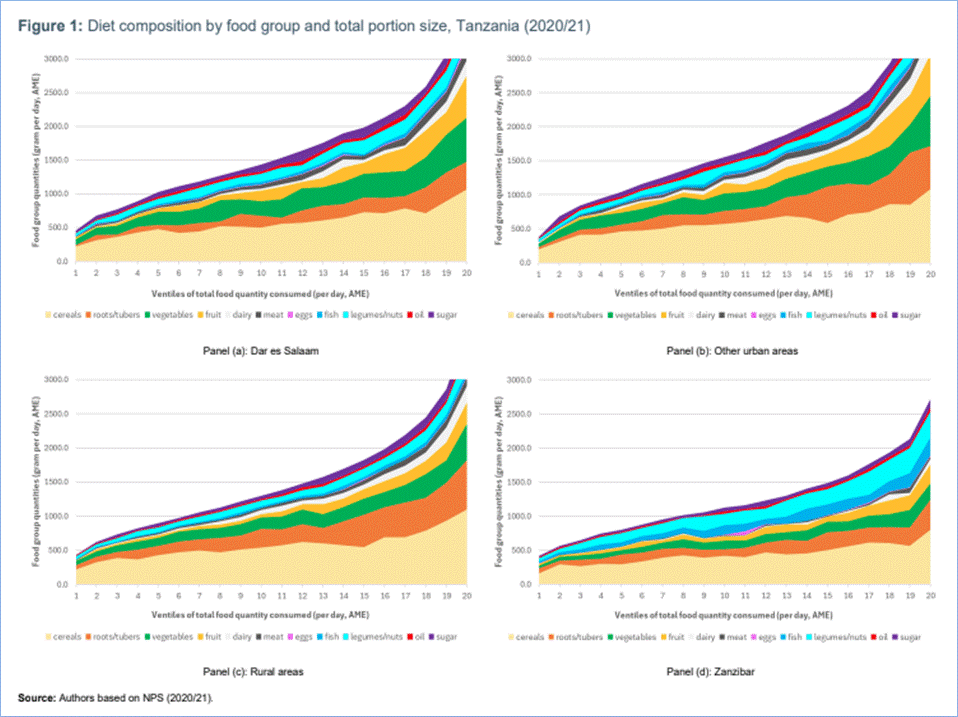
Figure 1: Diet composition by food group and total portion size, Tanzania (2020/21)
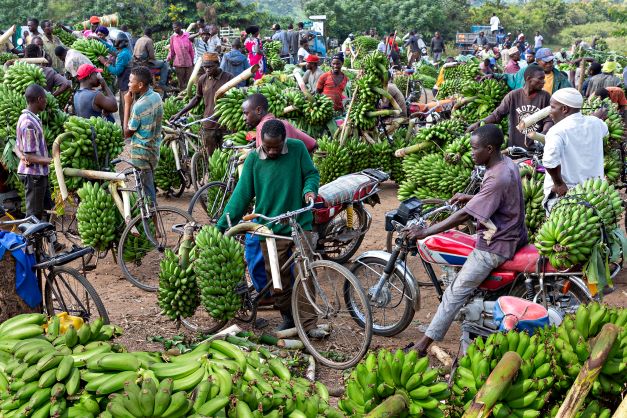
By 2050, a relatively smaller rural workforce must feed a much larger urban population. This restructuring demands a higher farm productivity and an entirely new supply chain architecture. Current rural-urban linkages remain underdeveloped, with storage, transport, and processing infrastructure lagging behind Tanzania’s needs. As smallholder farmers move away from subsistence production toward commercial agriculture, the food system must ensure productivity but also prevent the current post-harvest losses, which are on average,40%, with substantial variation across crops and geographical areas.
The Nutrition Gap Is Severe and Systematic
Tanzanians currently eat in a pattern that ignores nutritional science. IFPRI’s research compared actual consumption against two international healthy diet standards: the EAT-Lancet Reference Diet (ELRD), which balances human and planetary health, and the Hypothetical Micronutrient Adequate Diet (HMAD), which focuses on micronutrient adequacy (especially regarding calcium, iron, zinc, folate, vitamin B12, and vitamin A).
Both frameworks reveal that people consume far too many cereals and sugar products while eating far too few nutrient-dense foods. Figure 2 displays the demographic projections that drive these food requirements.
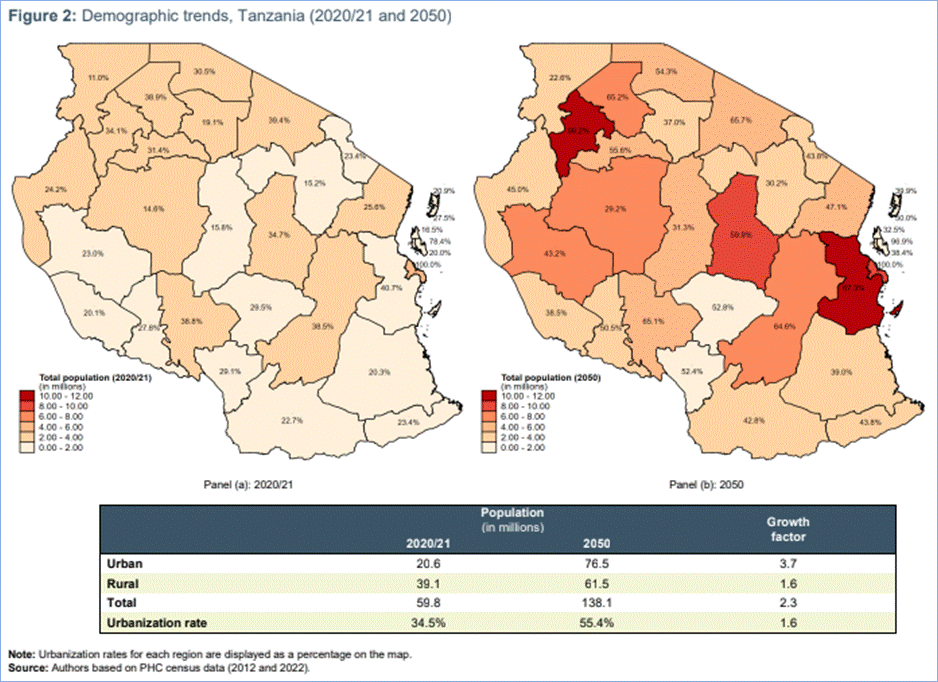
Figure 2: Demographic trends, Tanzania (2020/21 and 2050)
Across all four analytical strata (Dar es Salaam, other mainland cities, rural areas, and Zanzibar), dairy product consumption averages only one-third of recommended levels. Fruit and vegetable gaps are more pronounced, reaching 100-178 grams below requirements in rural areas and Zanzibar. Egg consumption falls below one-quarter of what nutritional adequacy demands. Fish consumption shortfalls apply primarily under the HMAD standard, suggesting that achieving micronutrient adequacy requires substantially more fish than the more environmentally focused ELRD recommends.
These are not merely statistical abstractions. Food adequacy rates, which measure the percentage of recommended intake levels for each food group that is met by current consumption, tell a troubling story. In dairy, adequacy rates drop below 25% in virtually every region. For eggs under HMAD requirements (50 grams per adult daily), adequacy rates are catastrophically low. By contrast, cereal and sugar adequacy exceeds 85% everywhere. Tanzania feeds its people plenty of carbohydrates but systematically under-delivers on the nutrients that prevent disease and enable Tanzanians to flourish.
Except for cereals and sugars, Achieving Healthy Diets Demands Systematic Expansion Across Nearly Every Food Category
IFPRI’s research identifies which foods require near-demographic growth (matching the referenced population increase of 2.3 times) and those that require substantial expansion.
Sugar and cereals essentially require no growth: that is, current supplies of both food groups are roughly sufficient to adequately nourish the population in 2050. While processed cereals still need a modest expansion to 1.1 times current levels, the supplies of roots and tubers can actually decline to one-half the current level under ELRD assumptions. However, given the importance of roots and tubers for climate change resilience, the current 2020/21 supplies of carbohydrates should be sufficient for 2050.
Everything else requires growth. Fruits, vegetables, and cooking oils must expand through higher outputs of tomatoes, onions, spinach, bananas, and avocados. Animal-source foods require the largest increase, through outputs of fresh milk, eggs, and fish.
Policy Must Evolve to Match Nutritional Science
Tanzania’s 2024 Agriculture Master Plan selects 20 priority commodities to guide development through 2050. The alignment between this plan and the nutritional demands identified in IFPRI’s research is incomplete but promising. Of the 20 selected priorities, twelve align with critical food system needs: banana, avocado, Irish potato, tomato, sunflower, kidney beans, pigeon peas, green gram, aquacultural products, poultry, red meat, and dairy.
However, a critical gap exists around eggs, mangoes, oranges, onions, and leafy vegetables. According to IFPRI’s research, eggs require substantial expansion for healthy diets in 2050, yet receive limited attention within the poultry subsector. On the other hand, while fruits and vegetables are mentioned in the plan, they lack a dedicated focus despite their role in addressing nutritional gaps and dietary diversity.
Furthermore, Tanzania’s 2024 Agriculture Master Plan’s yield targets for 2030/31 represent progress but fall short of what the research identifies as necessary by 2050. For instance, the plan targets dairy yield of 0.6 tons per cow by 2030/31, a modest improvement from 0.4 but far below the longer-term trajectory needed.
Post-harvest losses represent a parallel policy failure. Though acknowledged formally by Tanzania’s government, these losses are insufficiently integrated into agricultural planning. Tanzania’s current losses average 40% across the food system, with particular severity in fruit and vegetable chains. Reducing losses offers immediate productivity gains without requiring yield improvements.
What Comes Next for Tanzania’s Food System
The research identifies three complementary strategies that could make 2050 targets achievable.
Closing the post-harvest loss gap. A 40% loss rate from current production, if avoided, could theoretically feed more than 40 million people at 2020/21 consumption levels. Better storage, efficient energy sources, processing, and transport infrastructure in rural areas and along supply chains could redirect waste into consumption.
Accelerating agricultural productivity. Yield increases must follow sustainable intensification principles that account for greenhouse gas emissions, biodiversity, and water stress. Improved production systems emit substantially less than traditional ones while delivering higher output per hectare.
Strengthening rural-urban linkages and expanding urban agriculture. Tanzania’s major cities show vastly different food processing and retail capacity. Targeted investment in infrastructure could increase access to agricultural supply and reduce transport costs while ensuring affordability for low-income urban residents.
If Tanzania acts with intention across production, energy efficiency, preservation, and distribution, the projected population can eat well. IFPRI’s research provides the policy blueprint. The next two and a half decades will determine whether Tanzania has the political will to build a nutritious and sustainable food system.
Wim Marivoet is a Research Fellow in the Development Strategies and Governance Unit of the International Food Policy Research Institute (IFPRI).
Roselyne Alphonce is a Senior Researcher and Lecturer at the Sokoine University of Agriculture, Morogoro, in Tanzania.
This post is based on SFS4Youth WORKING PAPER #9
Reference: Marivoet, Wim; and Alphonce, Roselyne. 2025. Implications of increased urbanization and consumer awareness on future food supplies in Tanzania. SFS4Youth Working Paper 9. Washington, DC: International Food Policy Research Institute. https://hdl.handle.net/10568/178094