
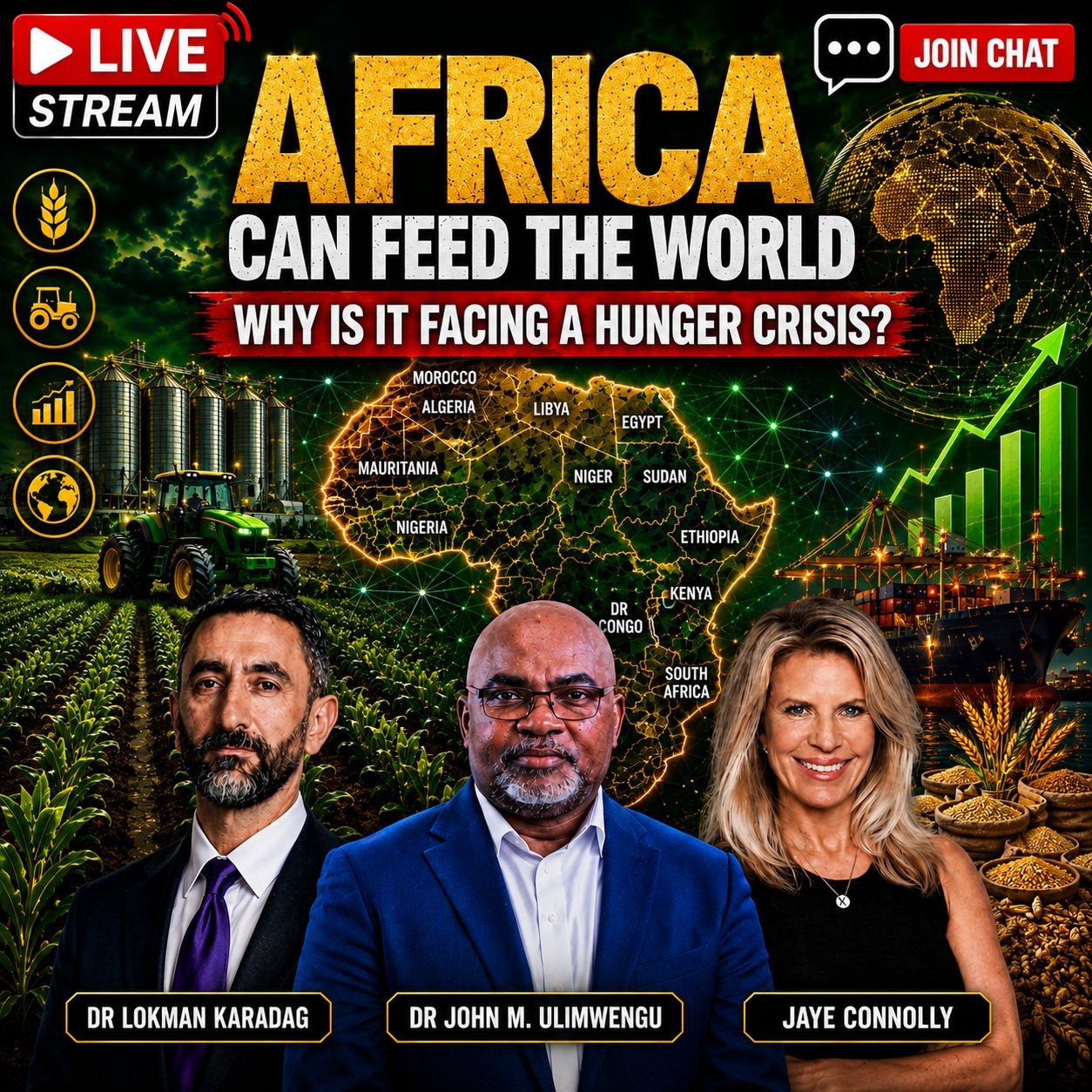
In a recent episode of Africa Frontline, Dr. John Ulimwengu, Senior Research Fellow at the International Food Policy Research Institute (IFPRI), discussed the structural challenges shaping Africa’s food systems and the policy actions needed to translate the continent’s agricultural potential into improved food security and nutrition.
Despite holding nearly 60% of the world’s uncultivated arable land, Africa continues to import more than US$50 billion in food annually, while more than 300 million people remain undernourished. According to Ulimwengu, this paradox reflects not a shortage of resources, but fragmentation across food systems—from land governance and agricultural finance to infrastructure, markets, and institutional coordination.
The discussion highlighted the importance of moving beyond agricultural production alone toward a food systems approach that strengthens implementation, improves coordination across sectors, and supports evidence-based policymaking. Ulimwengu also emphasized the significance of the African Union’s CAADP Kampala Declaration, which shifts the focus from agricultural growth to broader food systems outcomes, including food and nutrition security, resilience, sustainability, and inclusive economic development.
Watch the full Africa Frontline interview to learn more about the policies, institutions, and investments needed to advance food systems transformation across Africa.
▶️ Watch the full interview